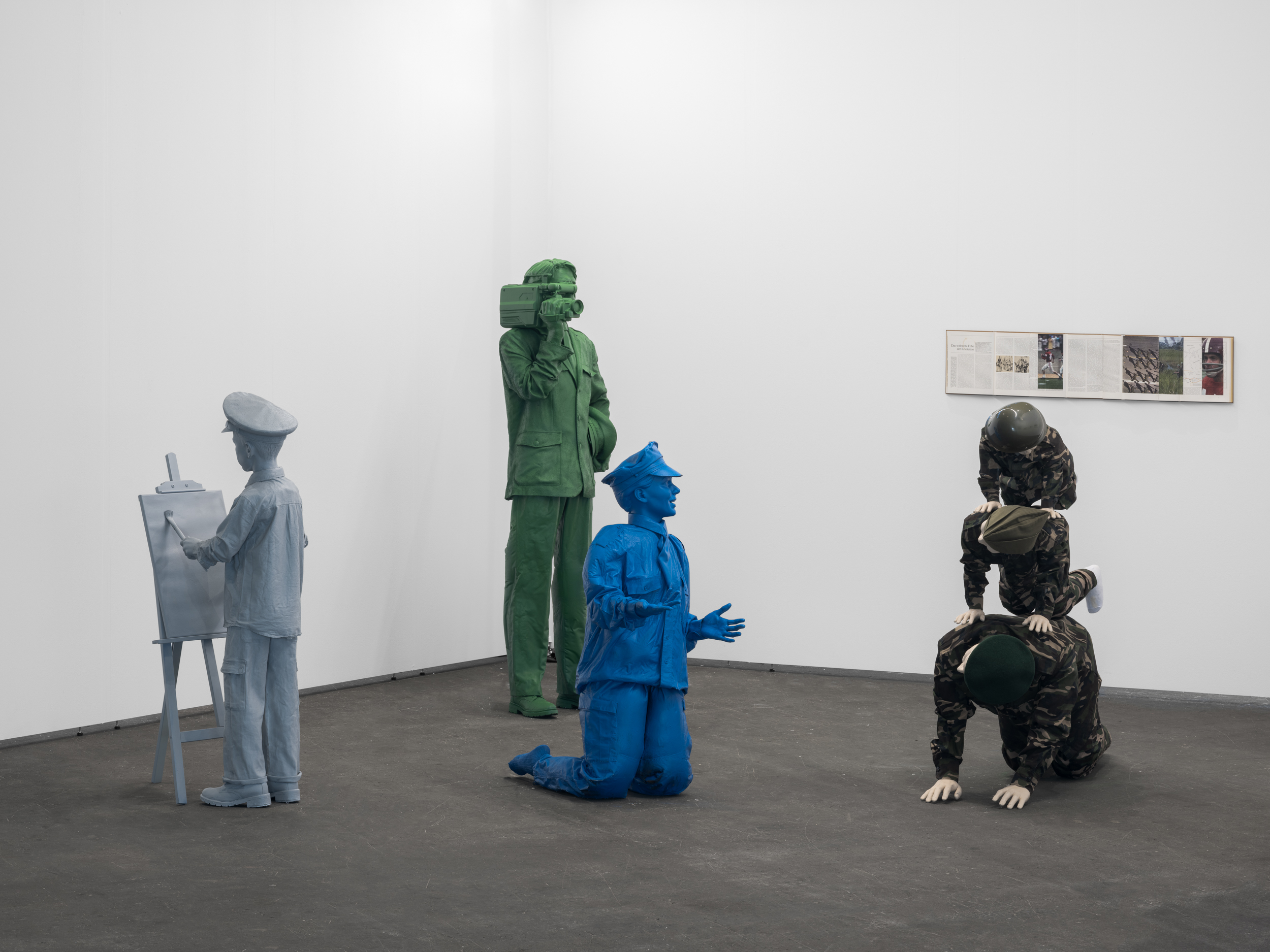
On the occasion of LISTE, KIN is pleased to present a solo booth of work by Dan Vogt. The presentation brings together a group of statues alongside a series of reconfigured, elongated books. The works reflect on how the major ideological transformations that occurred in the postwar period were renovations established in public consciousness by apparatuses of the image.
Since 1913, the readymade has been the topic of wide-ranging fascination. Early on it was rejected by critics who claimed that arbitrary objects becoming works of art would erode the boundary between art and everyday life. But today, the landscape is much changed. A century on, the image is our sordid sovereign and what instruments we have agree that art operates in response to image and not the other way around. One wonders whether the critics of the day might have foreseen a world where the crisis would be so judiciously set in motion by friendly fire.
Vogt’s oeuvre occupies the ground between the object and its cinematic animus. The result is not an example of the readymade in its standard sense but something clearly fictitious and made-up. Vogt’s object does not circulate within a pre-existing market; he produces the object. But its image does and has been since the dawn of the motion picture. His are ideological readymades in the sense that they are the product of mechanically reproduced images of democratic victory, suburbanisation and the expansion of mass consumer culture under Cold War media systems that have since become naturalised as reality. Something closer to Steven Spielberg and Sean Penn rather than to the operational runnings of the United States Special Operations Force.
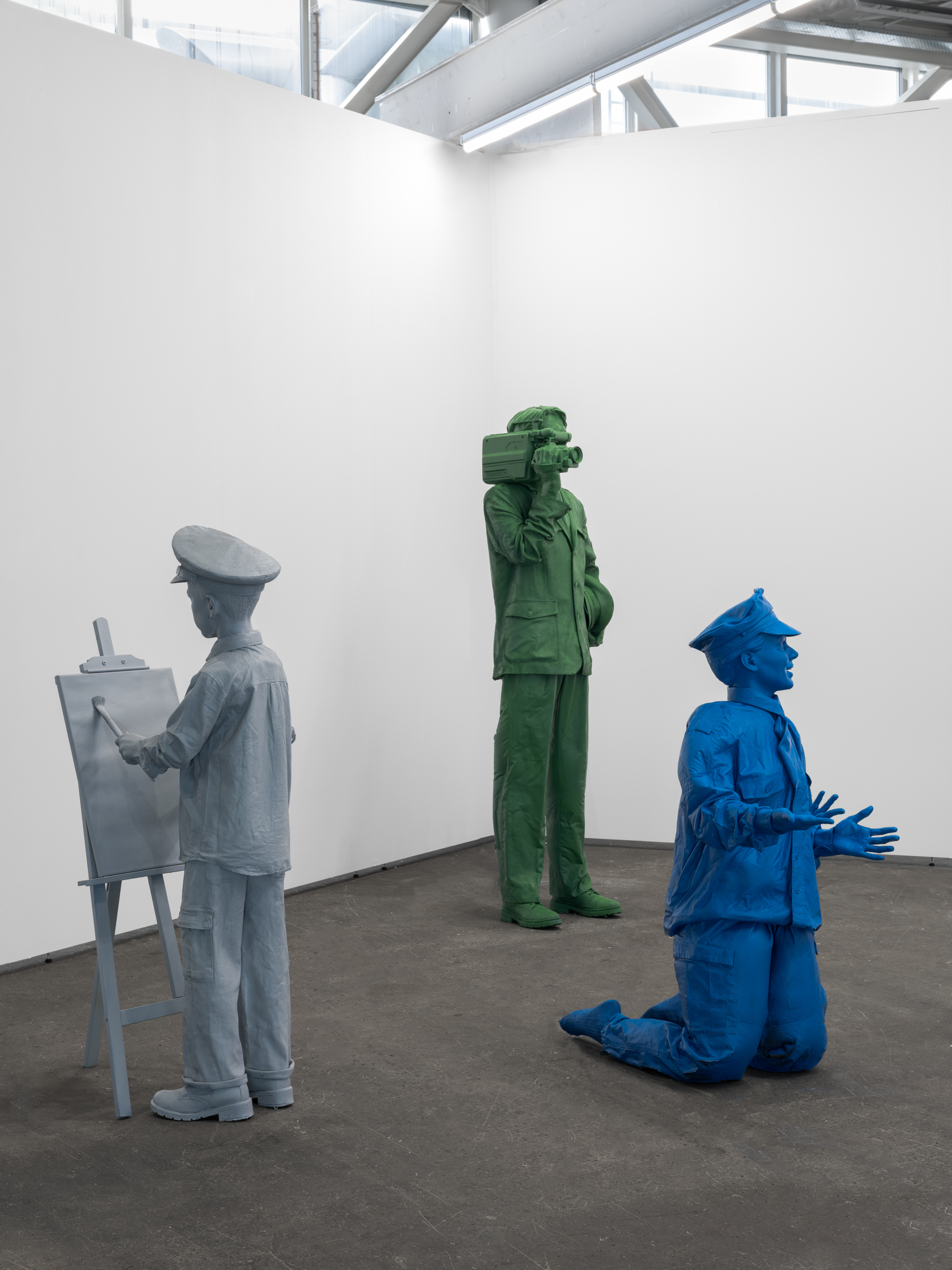 Installation view: Dan Vogt, Liste Art Fair Basel, 15/06 – 21/06/26
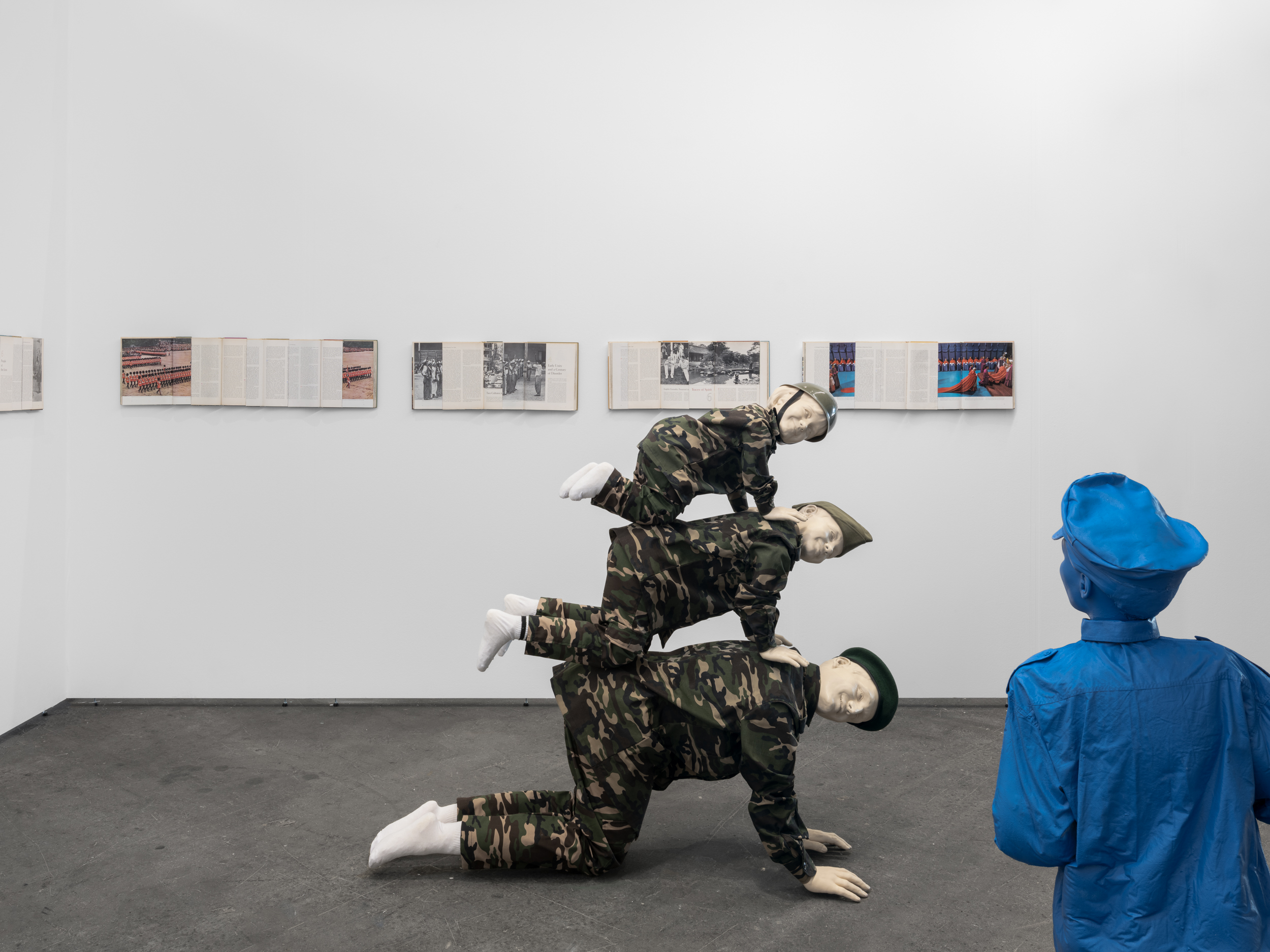 Installation view: Dan Vogt, Liste Art Fair Basel, 15/06 – 21/06/26
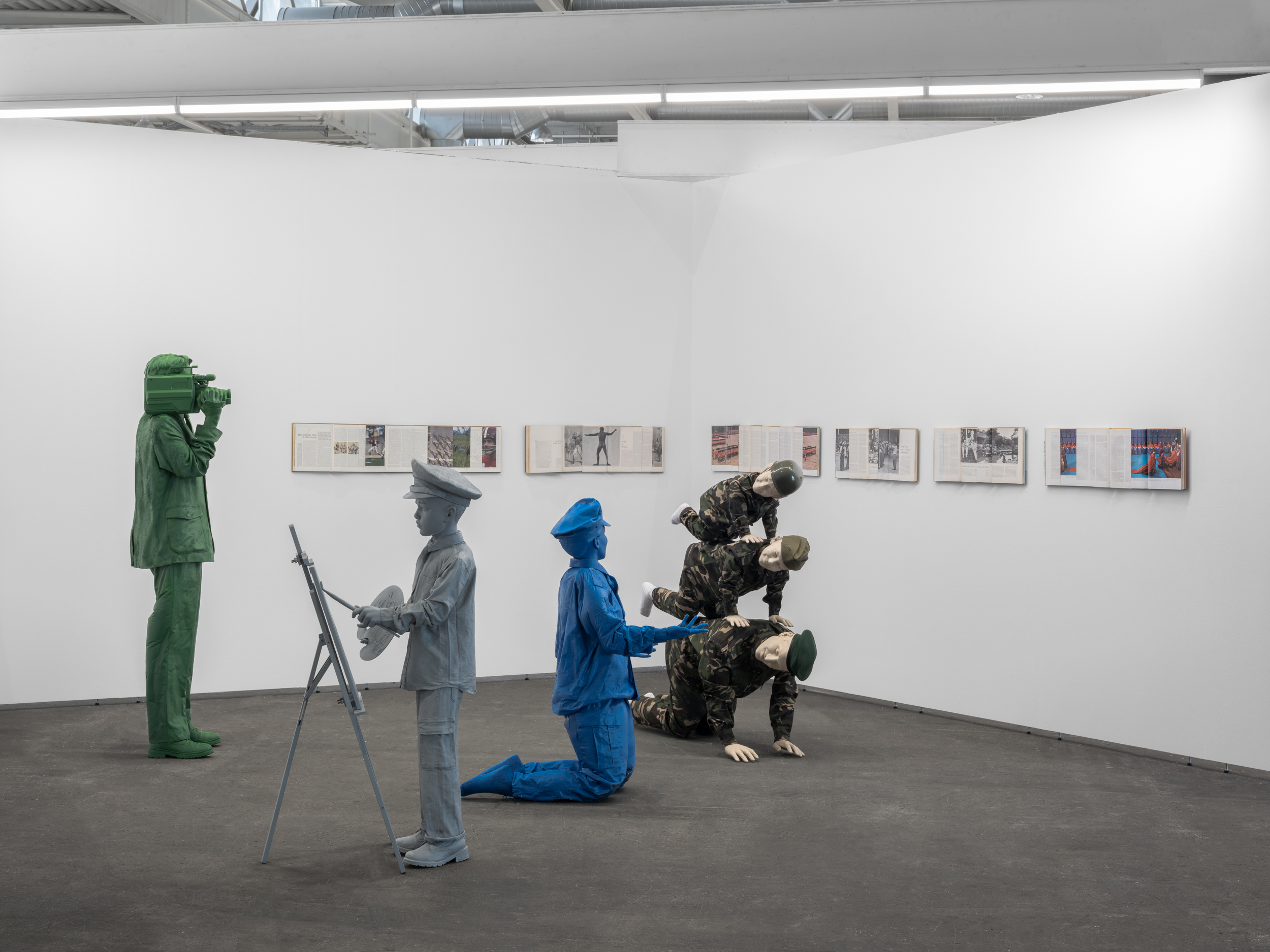 Installation view: Dan Vogt, Liste Art Fair Basel, 15/06 – 21/06/26
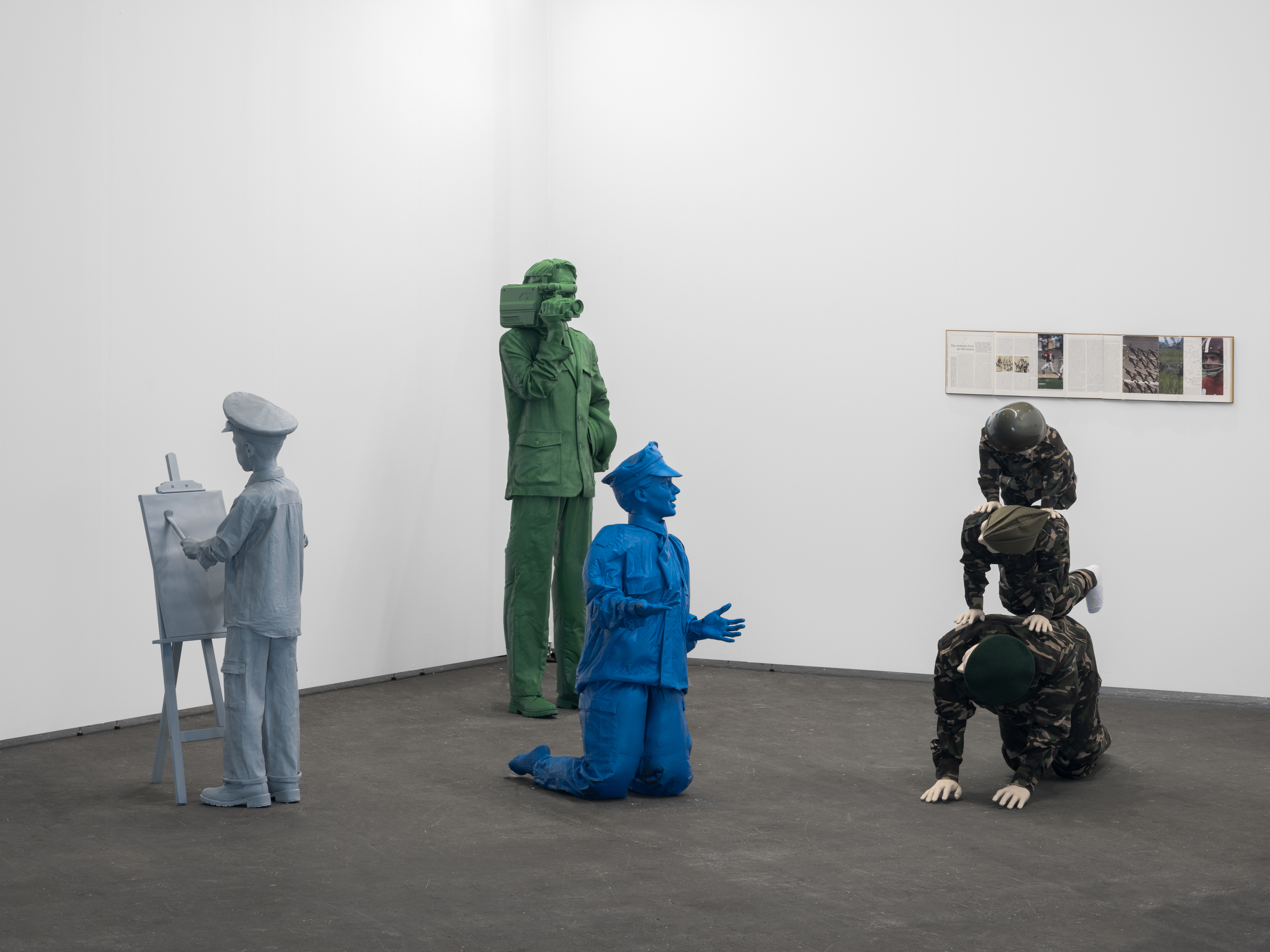 Installation view: Dan Vogt, Liste Art Fair Basel, 15/06 – 21/06/26
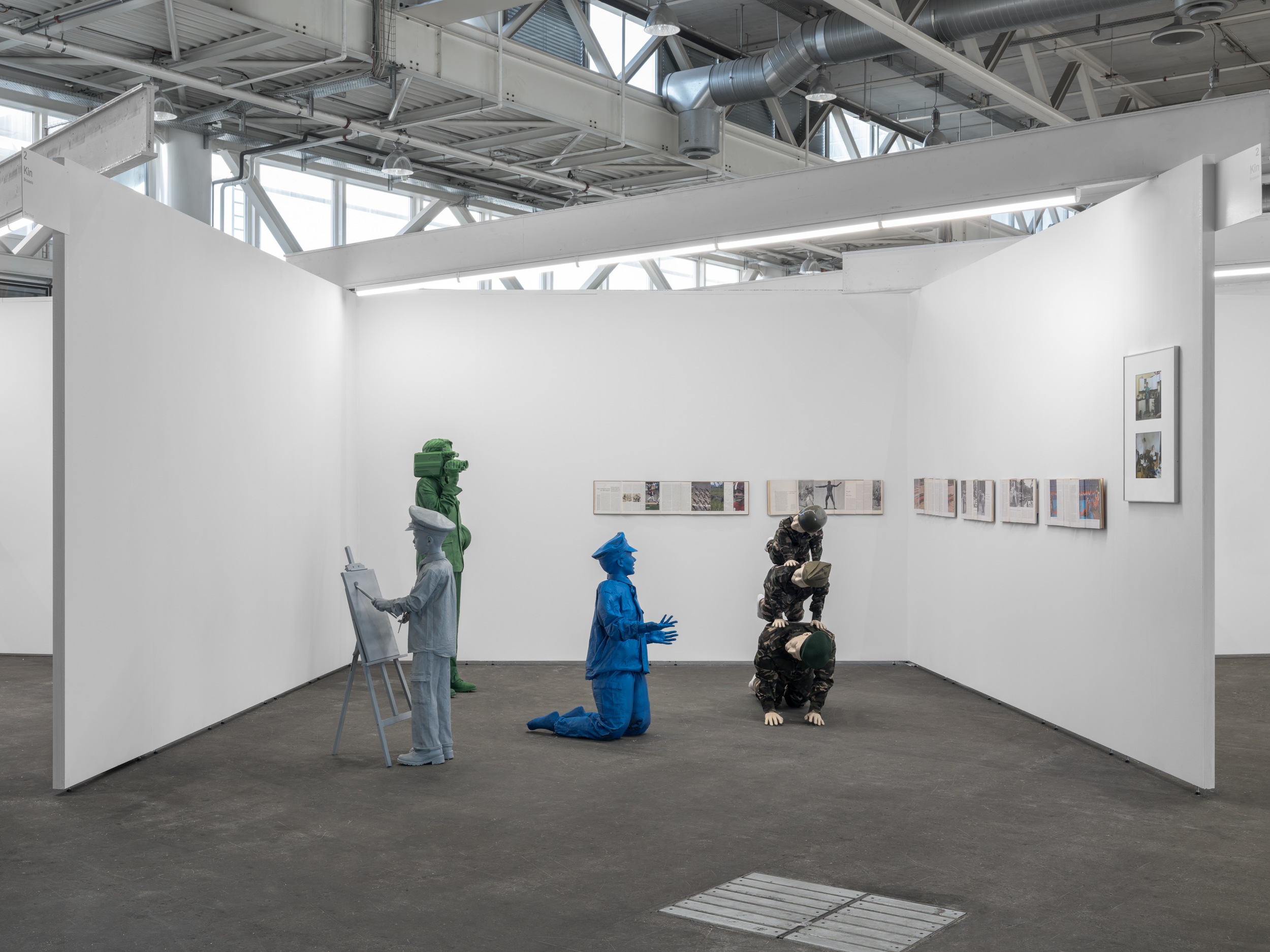 Installation view: Dan Vogt, Liste Art Fair Basel, 15/06 – 21/06/26
Consequently, Vogt’s statues are the ultimate tributes to the fantasy essential to post-war thinking. Across the family unit stacked like a pyramid, the officer videotaping, the military child who paints while his sister performs for the camera, the troops beseech themselves as victors of the western fairytale. The series continues Vogt’s interest in the relationship between the suburban family unit and the drill squad where filiation replaces rank and duties become chores. Now, the assignments have been replaced by more leisurely operations like artistic production.
Beyond the statues, the series of elongated books participate in the presentation like rolls of film in which time is rendered continuously. Unfolding from left to right, they repeat the process endemic to filmmaking: cutting, collating and assembling fragments into new narratives that reformulate their original intention. Here, the image returns newly formed but still borrowing from itself. With titles like Traces of Spirit or Great Wealth of Power Redirecting the Uses of Spain’s Work Force, the works turn history and storytelling into pure image rather than sentences to be read or knowledge to be absorbed. Because the sentences are often cut off, they become surfaces that maintain a stable relation to meaning and ideology.
In 2026, we teeter between past and future, old time and new time. The distinction between representation and reality continues to narrow, while the symbolic systems that have organised our living and thinking since the end of the Second World War enter states of irreversible rupture. The job of guessing what comes next seems better suited to psychics and seers but Vogt’s works do not speculate on the future. Instead, they function as reliquaries for the world that we already know, returning to us the images, narratives and fantasies through which the post-war era learned to understand itself.